
Docker containers I'm currently using
List of the docker containers I am currently using
I deployed a few docker containers on my home NAS and VPS. Here is the list:
- Home NAS
- SUI2 - Start Page / Navigation Page
Linuxserver docker-nginx - nginx with config files for easy customization[Update: Retired / No longer needed with SUI2]- Jellyfin - Media management
- Calibre-web - Ebook management
photoprism - Photo management[Update: Replaced by Immich]navidrome - Music server and streamer[Update: Inactive / switched to Spotify & Apple Music]
- VPS
- Linuxserver SWAG - nginx + certbot [Update: Cloudflared Tunnel + SWAG]
- Vaultwarden - Alternative implementation of the Bitwarden server API written in Rust.
- TinyTiny-RSS - Self-hosted RSS feed reader and aggregator
Brief Description
SUI2
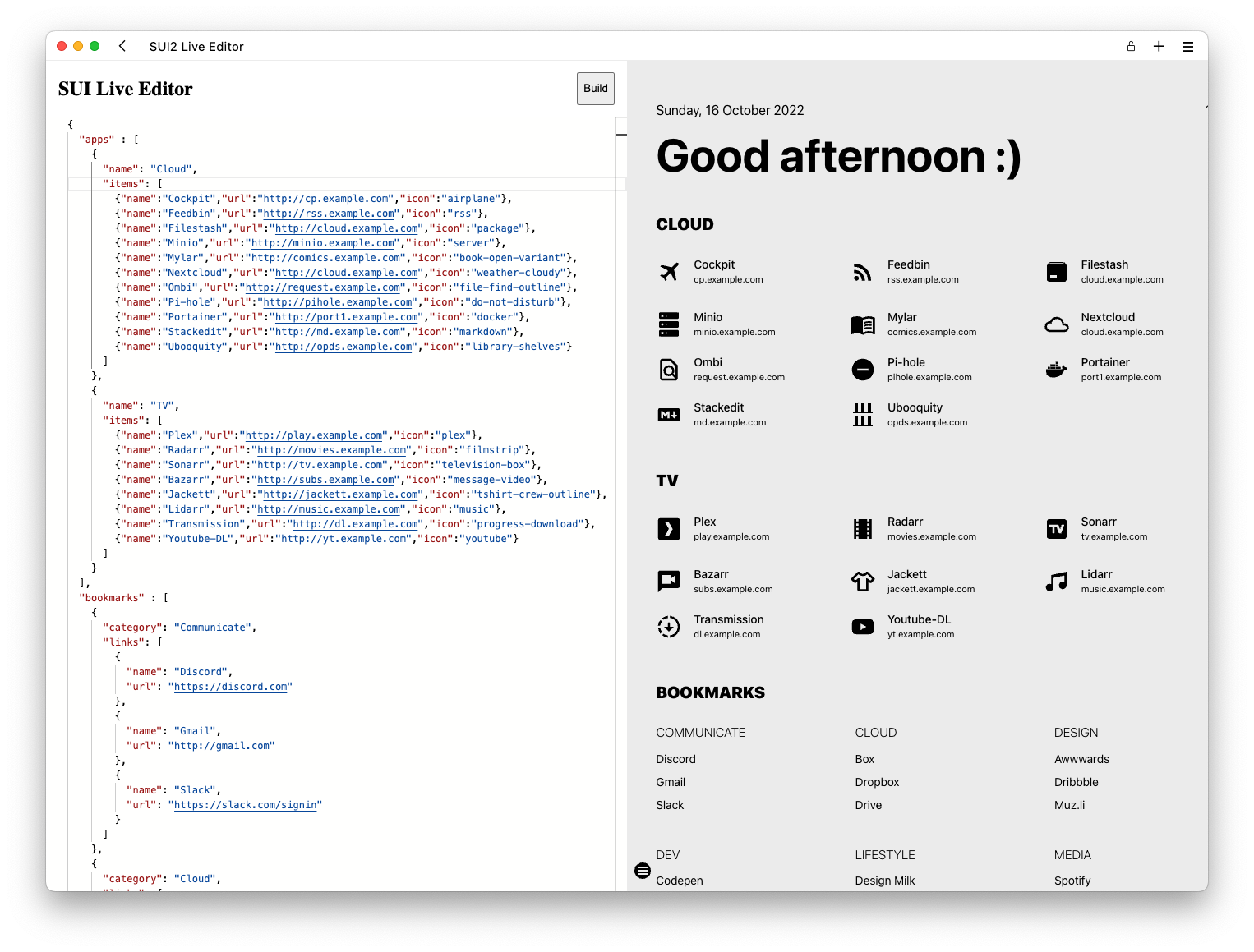
I needed a navigation page for the services I have. I was using Heimdall at the beginning, which is also a good one. However, I eventually switched to SUI2, as its interface looks cleaner. I also like the text-based way of editing and organizing the links.
Screenshot from its github page
Linuxserver docker-nginx and linuxserver SWAG
💡 [Update]:
- Home NAS (docker-nginx): I no longer use the standalone nginx container on my NAS. A local reverse proxy turned out to be unnecessary for my home setup—the clean SUI2 navigation dashboard completely satisfies my daily needs for accessing local services.
- VPS (SWAG): I migrated to a Cloudflared Tunnel + SWAG architecture on my VPS. I closed all public inbound ports (including 80 and 443) on the server for enhanced security. Traffic is now securely routed through a Cloudflare Tunnel daemon (
cloudflared) directly to SWAG inside the internal Docker network. SWAG continues to handle reverse proxying and SSL/routing to other backend containers, while my VPS IP remains completely hidden from the public internet. Everything else in the setup remains unchanged.
The difference between these 2 containers is that the SWAG container includes certbot, which can automatically renew the certificate.
On my VPS, I only expose the nginx ports (80, 443), and use nginx to reverse proxy the docker services via the docker internal network.
I am not good at configuring nginx. Linuxserver also provides this repo with lots of pre-defined reverse proxy config files, which covers most of the docker services you can think of. This saved me a lot of time and effort.
Jellyfin
Just like Emby and Plex, Jellyfin can also manage your movies and TV shows. The main reason I chose Jellyfin is that it is open-source and free.
I am using the docker image from linuxserver. (https://docs.linuxserver.io/images/docker-jellyfin)
Calibre-web
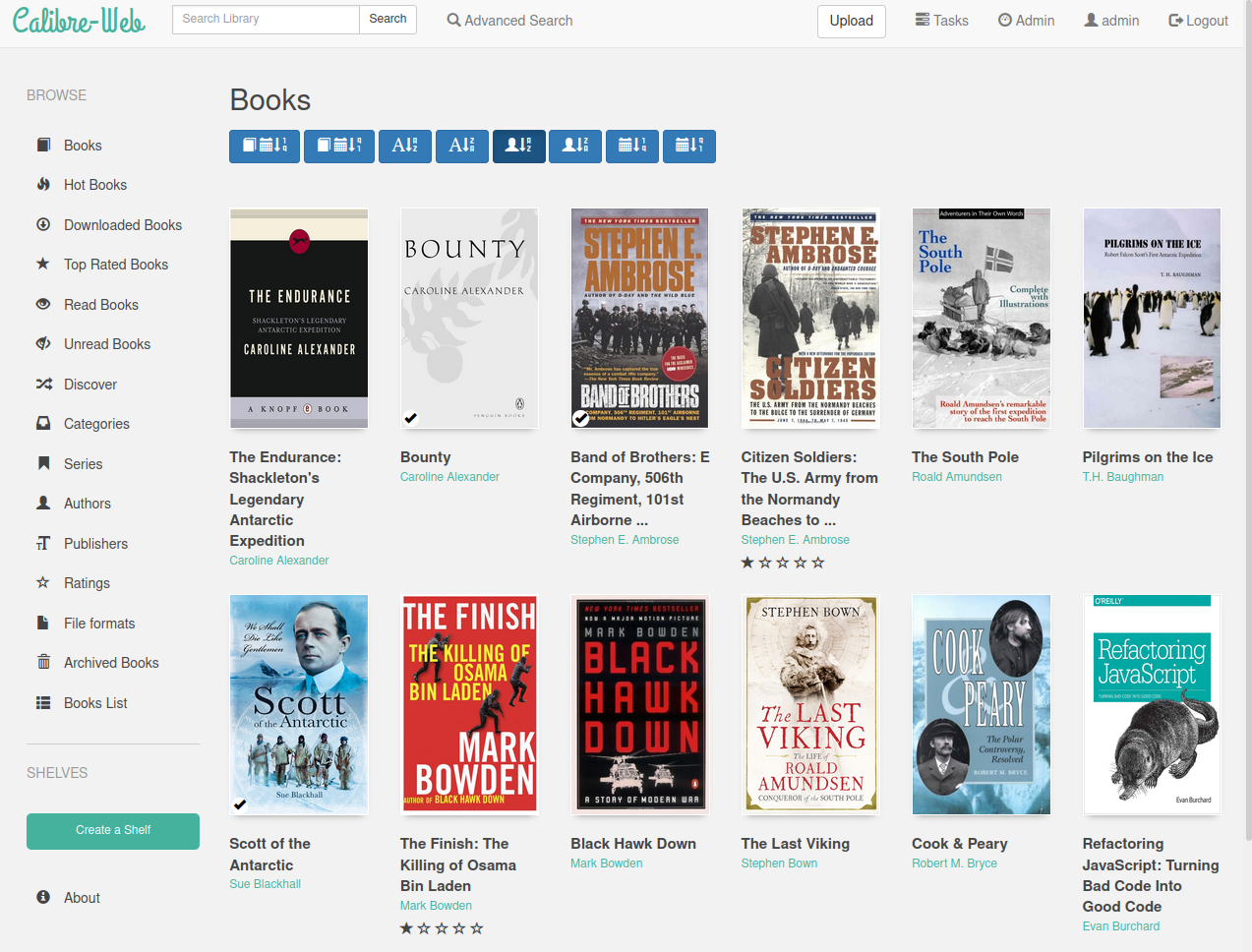
I use it to manage my ebooks. It’s essentially a web UI using a Calibre database. You can easily upload & download ebooks from any of your devices, and it also supports reading certain formats of ebooks directly in the browser. Very useful when you just want to quickly find something but don’t want to download the whole book.
I use the docker image from linuxserver, too. (https://hub.docker.com/r/linuxserver/calibre-web)
Screenshot from its github page
Photoprism
💡 [Update]: I no longer use PhotoPrism and have switched to Immich for all my photo management and backup needs.
I used to keep a virtual machine to run Synology DSM 5 just for its Photo Station to back up and manage my photos from my phone and camera. However, this open-source self-hosted service is now good enough for me to replace it. It doesn’t have a client app. I use PhotoSync to upload / back up the photos to my NAS and use Photoprism to browse them.
Screenshot from its github page
navidrome
💡 [Update]: I haven’t used Navidrome in recent years. I’ve since moved on to commercial streaming services, first using Spotify and now primarily Apple Music.
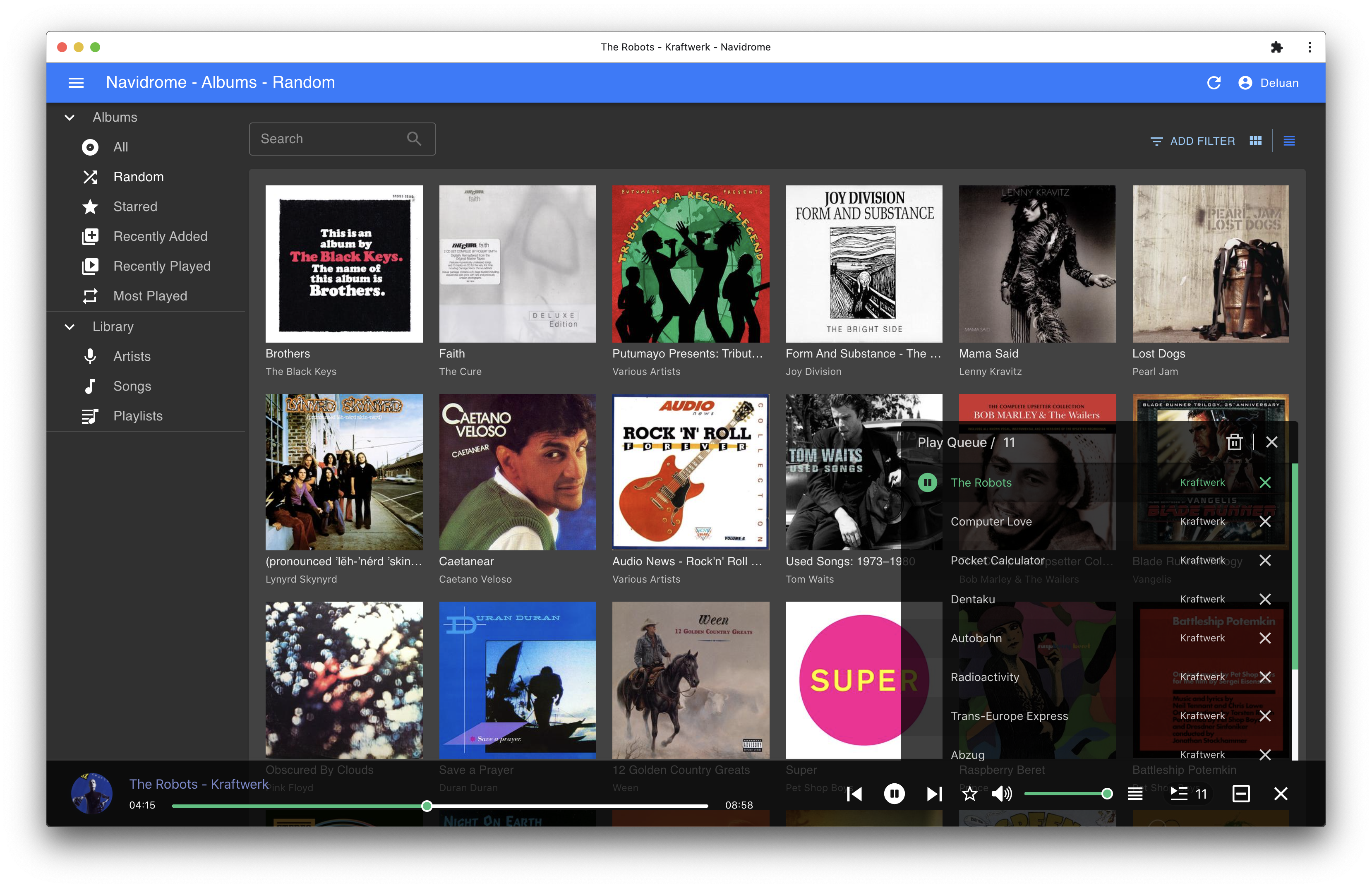
I use this container to play my own collection of music on my home LAN. I like it because it’s cross-platform and can be accessed through a web interface. There are also many free and paid iOS and Android apps available. However, one of the drawbacks is that it doesn’t support cue files and can’t play music from compressed archives.
Screenshot from its github page
Vaultwarden
A third-party implementation of the password manager Bitwarden. I use it instead of the official version because Vaultwarden has lower system requirements and is more lightweight. I used to use Keepass with cloud sync, but over time, I found it less convenient for sharing passwords with family members. Bitwarden allows sharing some passwords with family members through organization settings. Furthermore, its client applications are available on all platforms and are all free.
TinyTiny-RSS
A self-built RSS feed reader. I use it because it’s cross-platform and accessible through web browsing. There are also paid and free iOS and Android clients available.
Update (2026-11-01): Updated service status for Photoprism (migrated to Immich), Navidrome (switched to Spotify & Apple Music), docker-nginx (retired on NAS; SUI2 is sufficient), and SWAG (switched to Cloudflared Tunnel + SWAG with closed 80/443 inbound ports).